
NIO and Geely Sign Battery Swapping Deal as Chinese EV Makers Expand Charging Networks
NIO Expands Battery Infrastructure Partnership
SHANGHAI, China, Sep 28, 2026, ZEX PR WIRE — NIO has made battery swapping a central part of its electric vehicle infrastructure strategy, allowing drivers to replace a depleted battery with a charged unit rather than waiting for a conventional charging session.
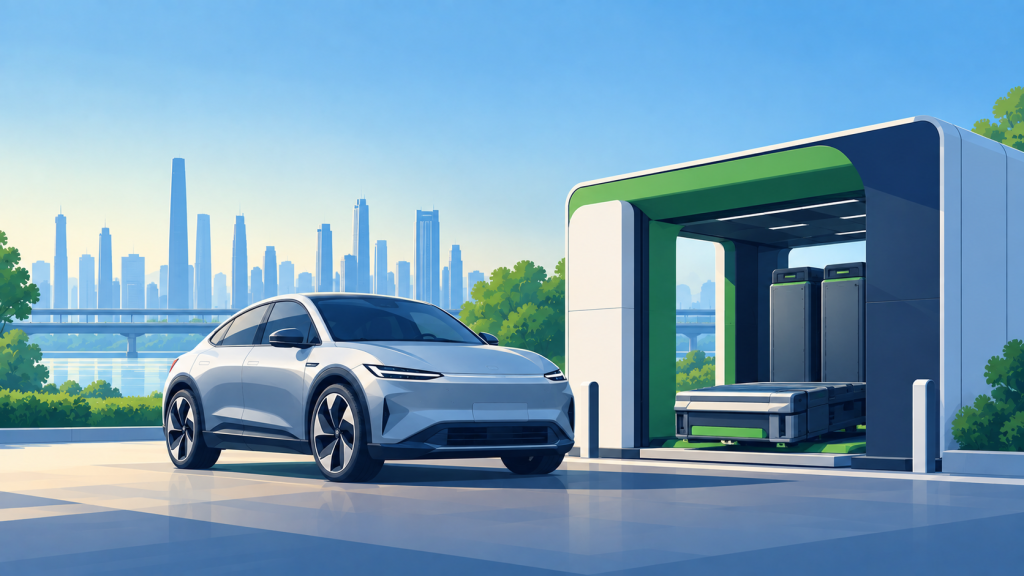
The agreement with Geely gives the company another major automaker with which to develop that infrastructure. Geely will take a 30% stake in NIO Power, while the companies will work together on battery swapping and charging services.
The partnership could also allow the companies to improve the utilization of existing charging and swapping infrastructure by supporting vehicles from more than one manufacturer.
Battery Swapping Takes a Larger Role
Battery swapping offers a different approach to EV charging.
Instead of connecting a vehicle to a charger and waiting for the battery to recharge, a swapping station can remove a depleted battery and install a fully charged replacement. This can significantly reduce the time required for the vehicle to return to operation.
The model requires substantial infrastructure investment because operators need stations, replacement batteries and systems capable of managing battery inventory.
NIO has spent years developing this network, making NIO Power an important component of its broader EV business.
The partnership with Geely provides an opportunity to distribute those infrastructure costs and potentially increase the number of vehicles that can use the network.
Geely Adds Another EV Infrastructure Channel
Geely has developed several electric vehicle brands and operates across multiple segments of China’s automotive market.
Working with NIO gives the company access to an established battery swapping system while allowing both sides to explore greater compatibility between their infrastructure.
The agreement is also part of a wider trend in China’s EV industry toward cooperation on infrastructure.
Automakers face a common challenge as electric vehicle adoption grows: charging networks must expand quickly enough to support a larger vehicle fleet.
Shared infrastructure can potentially reduce duplication and allow companies to make greater use of charging assets.
The Economics of Battery Swapping
Battery swapping also changes the relationship between the vehicle and its battery.
Instead of requiring every vehicle owner to wait for their own battery to charge, a swapping network can maintain an inventory of charged batteries at different locations.
However, building that inventory requires significant capital, while battery ownership, maintenance and compatibility create additional operational challenges.
Standardization is therefore important.
If different manufacturers can use compatible battery swapping systems, the number of vehicles that can access a station increases. That can improve the economics of infrastructure investment while giving drivers access to a larger network.
NIO and Geely’s cooperation could provide another test of whether that model can expand beyond a single vehicle manufacturer.
China’s EV Infrastructure Enters a New Phase
China already has one of the world’s largest electric vehicle markets, and competition among manufacturers has increasingly extended beyond vehicle design and pricing.
Charging speed, range, battery technology and access to infrastructure have become important parts of the ownership experience.
The NIO and Geely agreement shows that infrastructure itself is becoming an area where automakers can cooperate even while competing for vehicle customers.
The immediate focus will be on how the two companies implement their partnership and whether additional vehicle models eventually become compatible with their shared infrastructure.
For NIO, the transaction also places greater attention on NIO Power as a standalone part of its business. For Geely, the agreement provides another route to expand its electric vehicle infrastructure options as China’s transition toward electric mobility continues.