
Samsung Forecasts Record AI Profits as Memory Chip Prices Rise and Nvidia Valuation Gap Widens
SUWON, Gyeonggi Province, 10 October 2026, ZEX PR WIRE — Samsung Electronics has forecast record quarterly operating profit of 107.4 trillion won, approximately $80.17 billion, as demand for artificial intelligence infrastructure drives strong sales of memory chips. The preliminary estimate for the July to September quarter represents nearly nine times the operating profit recorded during the same period last year. The forecast also exceeds analyst expectations of 106.1 trillion won, highlighting the strength of the current semiconductor cycle. Samsung expects quarterly revenue to reach approximately 195 trillion won, up around 127% year over year.
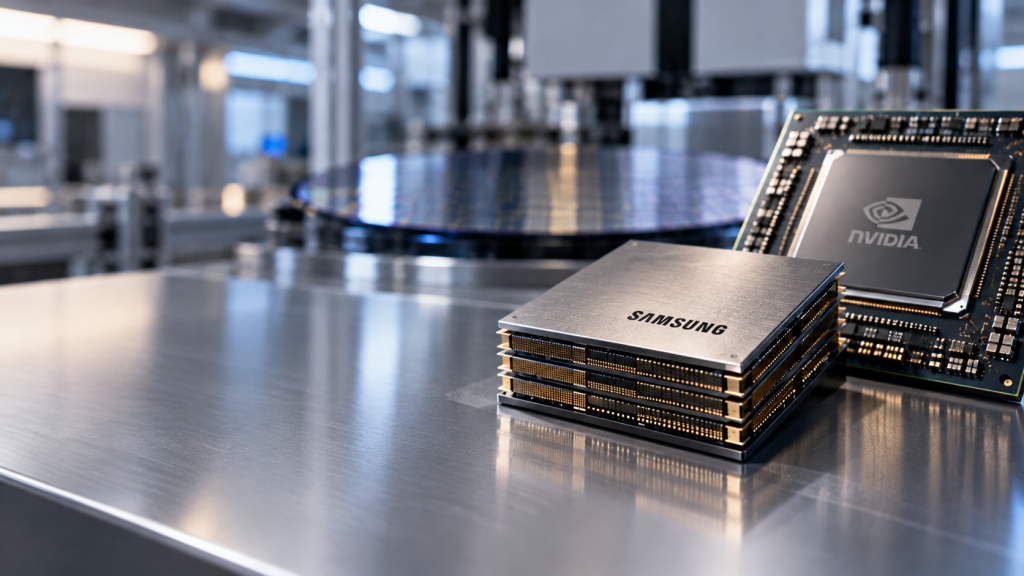
The results underscore the growing importance of memory chips in the AI supply chain, where demand for advanced computing systems is putting pressure on available semiconductor capacity.
AI demand drives memory chip prices higher
Samsung’s earnings outlook reflects strong demand for dynamic random access memory, or DRAM, and high bandwidth memory, known as HBM. These chips are essential for AI processors because they enable rapid data movement while supporting the demanding workloads associated with training and operating advanced AI models.
The supply imbalance has pushed memory prices higher as technology companies expand data centers and invest in additional computing capacity. Samsung and other memory manufacturers are benefiting from stronger pricing and demand for advanced products.
Samsung is also working to strengthen its position in the HBM market, where rival SK Hynix has established a strong presence. Expanding advanced memory shipments could help Samsung capture a greater share of AI infrastructure spending.
However, rising memory prices are not benefiting every part of Samsung’s business equally. Higher component costs are putting pressure on its smartphone and consumer electronics operations, illustrating how a semiconductor shortage can create both opportunities and challenges for an integrated technology manufacturer.
Why Samsung trades at a valuation discount to Nvidia
Despite its exceptional earnings forecast, Samsung’s valuation remains substantially lower than Nvidia’s. Investors typically assign higher earnings multiples to companies with more predictable growth and stronger pricing power.
Samsung operates across memory manufacturing, contract chip production, smartphones, televisions and other electronics. Its semiconductor business benefits when memory prices rise, but the industry is highly cyclical. Periods of limited supply can produce exceptional profits, while new manufacturing capacity can eventually increase supply and weaken pricing.
Nvidia, by comparison, focuses on AI processors and related computing platforms while relying on external manufacturers for chip production. Investors have generally rewarded its exposure to AI computing with a higher earnings multiple, reflecting expectations for continued growth.
Samsung must also commit substantial capital to factories and production equipment. These investments can strengthen its long term competitiveness but create additional financial obligations and execution risks.
Capital spending and supply remain key risks
Samsung’s record profit forecast does not eliminate uncertainty about future earnings. Analysts expect memory price increases to moderate in the fourth quarter, while a stronger South Korean won could reduce the value of overseas revenue when converted into local currency.
Competition from SK Hynix and Micron also remains important. If supply expands faster than demand or AI infrastructure spending slows, memory pricing could weaken and reduce profit margins.
Investors will therefore be watching Samsung’s detailed earnings report for information about its memory business, HBM shipments, manufacturing investment and shareholder returns. The company is scheduled to release its full third quarter results on October 29.
The current AI boom has significantly improved Samsung’s earnings outlook, but sustaining that performance will depend on disciplined investment, technological progress and the durability of demand for advanced memory.
For semiconductor investors, Samsung’s results highlight a central question: whether AI driven demand can support a longer period of strong memory pricing or whether the industry will eventually return to its traditional cycle of capacity expansion and margin pressure.