
TSMC Earnings Set to Test AI Chip Rally as Investors Watch Record Profit Forecast
HSINCHU, Taiwan, 12 October 2026, ZEX PR WIRE — Taiwan Semiconductor Manufacturing Co. is preparing to report another potentially record breaking quarter as demand for artificial intelligence chips continues to support the global semiconductor industry. Investors are watching the company’s upcoming results for evidence that spending on AI infrastructure remains strong enough to sustain earnings growth and justify elevated valuations across technology stocks.
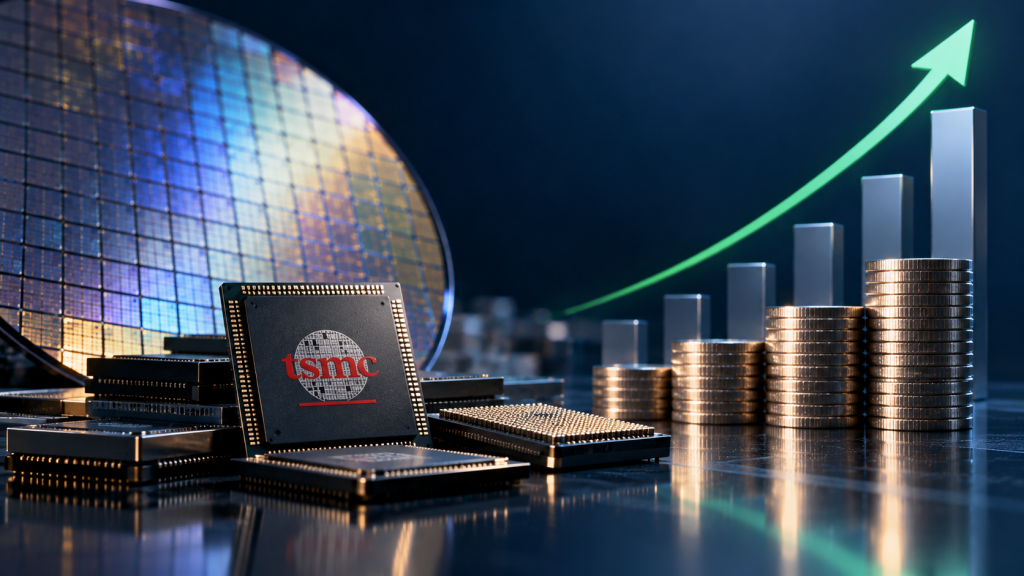
TSMC, the world’s largest contract chipmaker, is expected to report its sixth consecutive quarter of record earnings, according to analysts cited by Reuters on October 12, 2026. Demand for advanced chip manufacturing and the company’s chip packaging technology has remained strong as technology companies expand computing capacity for AI workloads.
The report is particularly important because TSMC manufactures processors designed by major semiconductor companies rather than selling most of its output under its own consumer brand. Its performance can therefore provide insight into demand across a broad section of the technology supply chain.
Advanced Packaging Becomes a Competitive Advantage
AI accelerators require more than powerful processor designs. They also depend on advanced packaging technologies that connect computing components and high bandwidth memory in compact, high performance systems.
TSMC’s Chip on Wafer on Substrate technology, known as CoWoS, has become an important part of this ecosystem. As AI processors grow more complex, packaging capacity can influence how quickly chip designers bring products to market.
This creates an opportunity for TSMC, but it also requires significant investment in manufacturing facilities, specialized equipment and production processes. The company’s ability to expand capacity while maintaining efficiency will remain an important factor in its financial performance.
Investors Will Focus on Guidance
The quarterly earnings figure will be only one part of the investment story. Investors will also assess revenue growth, gross margins, capital expenditure and management’s outlook for future demand.
Strong results could reinforce confidence that AI infrastructure spending is translating into tangible semiconductor revenue. However, markets may respond less positively if the company delivers strong historical numbers but provides a cautious outlook for upcoming quarters.
Manufacturing costs and the timing of capacity expansion also matter. Building additional production capability requires substantial capital, and returns depend on sustained customer demand and efficient factory utilization.
AI Spending Faces a Valuation Test
TSMC’s results arrive as global investors weigh the durability of the AI driven stock market rally. Semiconductor companies have benefited from expectations that demand for computing power will continue to expand, but higher valuations leave less room for disappointing earnings or weaker guidance.
There are also broader financial considerations. Rising borrowing costs and increased corporate investment in AI infrastructure have prompted investors to examine whether expected future returns justify current spending levels.
If TSMC confirms strong demand and maintains an optimistic outlook, it could support sentiment across chipmakers and related technology companies. A more cautious assessment could encourage investors to differentiate between businesses with established revenue growth and those relying heavily on future AI adoption.
What Comes Next for Semiconductor Stocks
TSMC remains a key indicator for the semiconductor sector because its manufacturing operations connect numerous chip designers with end markets ranging from data centers to consumer electronics.
The upcoming report should help clarify whether advanced chip demand is continuing to exceed available production capacity and how much investment is needed to meet customer requirements.
For investors, the central question is no longer simply whether AI requires more computing power. It is whether that demand can generate sustained earnings growth while allowing semiconductor companies to manage costs, capital expenditure and valuation risks.
