
Omron’s $675 Million Onlogic Deal Signals New Push Into Industrial AI and Smart Manufacturing
NAGOYA, Japan, Oct 13, 2026, ZEX PR WIRE — Japanese automation company Omron has agreed to acquire US industrial computer manufacturer Onlogic and its parent company, Interlogic, for $675 million, strengthening its position in the growing market for physical artificial intelligence.
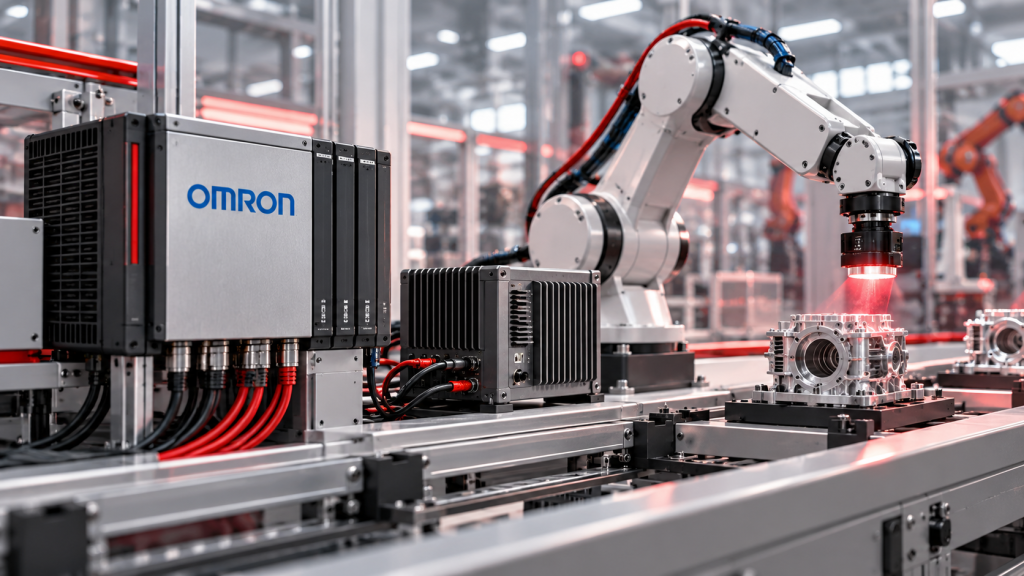
Announced on October 13, 2026, the proposed acquisition is intended to expand Omron’s capabilities in industrial computing and AI-driven automation. The transaction reflects a broader shift in the technology industry as manufacturers seek to connect artificial intelligence software with machines, sensors and equipment operating in real-world environments.
Unlike AI applications focused primarily on generating text or analysing digital information, physical AI aims to help machines interpret their surroundings, make decisions and carry out tasks in factories, warehouses and other industrial settings.
Why Industrial Computing Matters
Onlogic develops industrial computers designed to operate in demanding environments. Such systems can be deployed close to manufacturing equipment, where they process data from sensors, cameras and machines without relying entirely on remote cloud infrastructure.
This approach, often described as edge computing, can help reduce latency and support operations that require rapid responses. It is particularly relevant to industrial automation, where delays or interruptions can affect production schedules, equipment safety and product quality.
Combining industrial computing with Omron’s automation expertise could help the Japanese company develop integrated solutions for customers seeking more flexible and intelligent manufacturing systems.
Physical AI Creates a New Competitive Arena
Technology companies are increasingly exploring how AI can move beyond conventional software and into physical operations. Manufacturers are investigating applications such as automated inspection, predictive maintenance, robotic handling and adaptive production lines.
These applications depend on more than advanced AI models. They require reliable computing hardware, industrial connectivity, sensors and systems capable of operating continuously in environments where conditions can change rapidly.
Omron’s planned acquisition could strengthen its ability to provide several of these components through a more integrated technology offering.
However, commercial adoption will depend on whether the resulting solutions can demonstrate measurable improvements in productivity, reliability and operating costs. Industrial customers typically require extensive testing before deploying new technology across critical production processes.
Investment Risks and Integration Challenges
The $675 million transaction represents a significant strategic commitment. Investors will want to understand how the acquisition will be integrated into Omron’s existing operations and how quickly the combined business can generate additional revenue.
The companies will also need to align product development, sales channels and customer support across different markets. Integration challenges could affect the pace at which new products reach customers.
Competition is another consideration, as industrial automation providers, semiconductor companies and technology firms are investing in systems that connect AI with physical infrastructure.
What It Means for the Technology Sector
Omron’s move highlights how industrial AI is creating opportunities beyond traditional software and chip development. Hardware capable of running AI applications close to machines is becoming an important part of the technology stack.
If the acquisition delivers on its objectives, Omron could strengthen its position in intelligent manufacturing while Onlogic gains access to a larger industrial automation ecosystem.
For investors, the next milestones will include the transaction’s completion, integration plans and evidence that demand for physical AI is translating into sustainable commercial growth.
