
Hyundai Motor India Plans ₹11,000 Crore Pune Investment as Automaker Expands Production Capacity
MUMBAI, India, Oct 15, 2026, ZEX PR WIRE — Hyundai Motor India is planning a phased investment of ₹11,000 crore in its Pune manufacturing operations, strengthening its commitment to the Indian automotive market as automakers prepare for changing consumer demand and intensifying competition.
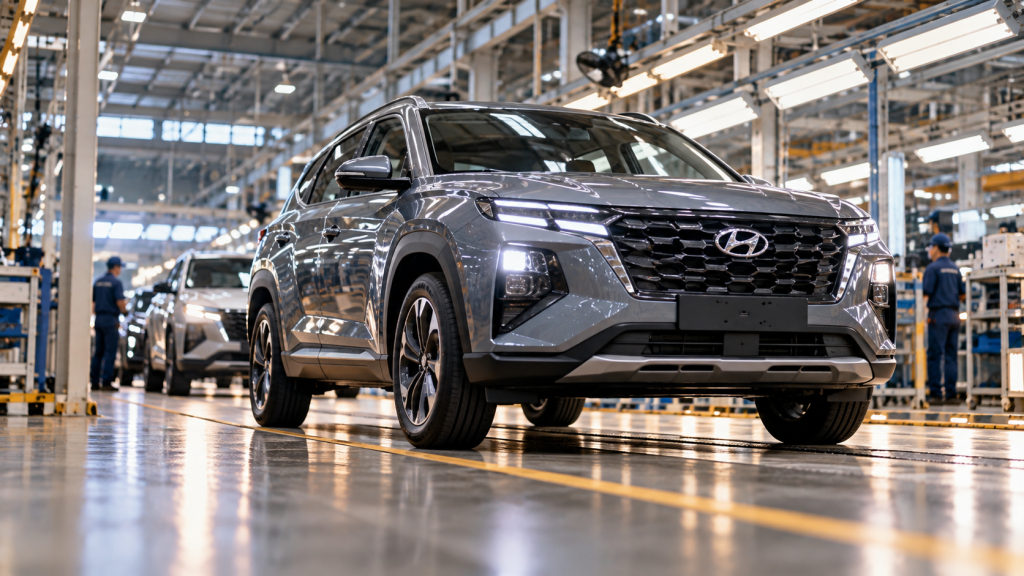
The investment announcement puts manufacturing capacity and long term production planning back in focus for India’s automobile sector. Expanding domestic facilities can help manufacturers improve supply flexibility, respond to demand shifts and support the launch of new vehicles without relying exclusively on existing production lines.
The development comes as investors assess how automobile companies are balancing capital expenditure with profitability, changing vehicle preferences and the costs of transitioning toward cleaner technologies.
Pune Expansion Targets Manufacturing Scale
Hyundai’s planned investment will support the expansion of its Pune operations in phases. Large manufacturing investments typically involve production infrastructure, assembly facilities, equipment and supporting supply chain capabilities.
Additional capacity can give automakers more flexibility to manage production schedules and respond to changes in demand. It can also strengthen relationships with component suppliers, logistics providers and other businesses operating around manufacturing hubs.
However, new facilities require substantial upfront spending before the resulting production capacity generates revenue. The commercial return will depend on utilisation rates, vehicle demand, production efficiency and the company’s ability to manage costs throughout the expansion.
For Hyundai, the investment signals a continued focus on India as a major manufacturing and sales market. The country’s automotive industry remains competitive, with domestic manufacturers and international brands competing across passenger cars, sport utility vehicles and emerging electric vehicle segments.
Competition and Technology Transition Shape the Outlook
Automakers are navigating a market in which consumers increasingly compare vehicle features, fuel efficiency, safety technology and ownership costs. Manufacturers must also prepare for changes in powertrain technology as electric vehicles and hybrid models gain attention.
Expanding production capacity can support future product strategies, but investment decisions need to reflect the pace of adoption across different vehicle categories.
The wider automotive supply chain could benefit from additional manufacturing activity through demand for components, industrial equipment and logistics services. Regional suppliers may also gain opportunities if production volumes increase and procurement requirements expand.
At the same time, manufacturers face risks from raw material price movements, currency fluctuations and changes in consumer spending. A capacity expansion that outpaces demand can put pressure on margins and reduce the returns generated by new facilities.
What Investors Should Watch
Investors will be looking for more detail on the investment timeline, production targets, vehicle allocation and the extent to which the expansion changes Hyundai Motor India’s long term capital expenditure plans.
Revenue growth alone will not determine whether the investment creates value. Operating margins, factory utilisation, product mix and cash generation will also influence returns.
The expansion may provide a longer term opportunity for suppliers and industrial businesses connected to India’s automobile manufacturing ecosystem. Its success, however, will depend on whether additional capacity is matched by sustainable vehicle demand.
Hyundai’s planned spending highlights a broader investment theme in India’s industrial economy: manufacturers are committing capital to strengthen domestic production, but the ultimate payoff depends on execution, cost discipline and the ability to compete in a rapidly evolving automotive market.
