
US AI Chip Restrictions Put Pressure on Chinese Technology Companies as Domestic Alternatives Gain Importance
SHANGHAI, China, November 21, 2026, ZEX PR WIRE, New US restrictions on access to advanced artificial intelligence chips are creating fresh challenges for Chinese technology companies, adding pressure to the country’s semiconductor and cloud computing sectors. The measures are also accelerating efforts by Chinese businesses to reduce their dependence on overseas computing hardware.
A Reuters report published on November 20 highlighted the impact on companies including Alibaba and Tencent, which have warned that restrictions could affect their AI development and infrastructure plans.
New restrictions extend beyond chip exports
The latest US measures target overseas data centres providing remote access to advanced AI chips for Chinese companies. The restrictions add to existing controls on semiconductor exports and the supply of advanced chipmaking equipment.
The broader impact is significant because AI development depends on access to large amounts of computing power. Restrictions affecting overseas infrastructure can limit the ability of Chinese companies to train advanced AI models and expand their computing capacity.
Nvidia has also suspended some chip shipments to China, according to the Reuters report, adding another constraint for companies seeking access to high-performance processors.
Alibaba and Tencent assess the impact
Alibaba CEO Eddie Wu said the new US rules would affect the company’s products and services next year. The company could also be forced to reconsider its long-term target of building 20 gigawatts of computing capacity.
Alibaba maintained its ambition to generate $100 billion in external cloud revenue by 2030. However, it expects cloud revenue growth to slow to between 30% and 45% next year, compared with 53% in the latest quarter.
Tencent President Martin Lau said the company’s cloud business would be relatively less affected because many of its AI services rely on inference workloads that can operate on domestic chips. He nevertheless acknowledged that restrictions could slow development of its next-generation AI models.
Domestic semiconductor development becomes more important
Chinese technology companies are increasingly looking towards domestic semiconductor suppliers to secure computing capacity.
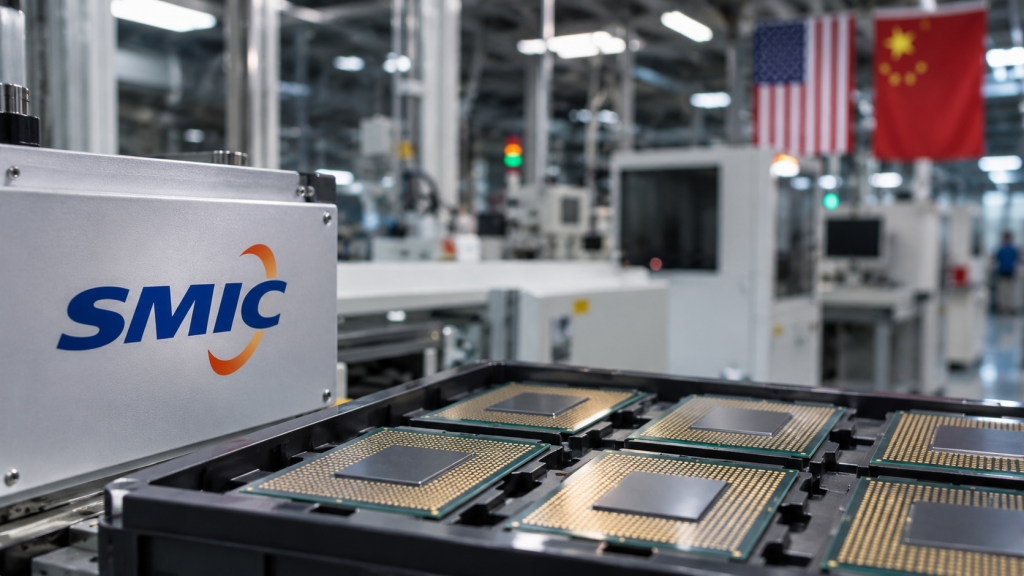
Semiconductor Manufacturing International Corporation remains a major part of China’s chip manufacturing ecosystem, although advanced production capacity remains constrained by restrictions on equipment and technology.
Companies such as Alibaba and Tencent are expected to increase their reliance on domestic processors where possible. However, replacing the capabilities of leading international chip manufacturers will take time and continued investment.
What investors will monitor
The development places Chinese technology companies at the centre of a wider geopolitical and industrial competition. Investors will monitor changes in semiconductor supply, cloud revenue expectations and the progress of domestic chip manufacturers.
The longer-term commercial impact will depend on how quickly China can expand its advanced semiconductor capabilities and whether its technology companies can maintain AI development and cloud growth under tighter restrictions.