
AI Chip Stocks Rebound as Samsung, SK Hynix and TSMC Recover From Sell-Off
SEOUL, South Korea, Oct 14, 2026, ZEX PR WIRE — Asian semiconductor stocks rebounded on October 14 as investors returned to artificial intelligence hardware companies following a sharp sell-off that had raised concerns about valuations, competition and the sustainability of AI investment.
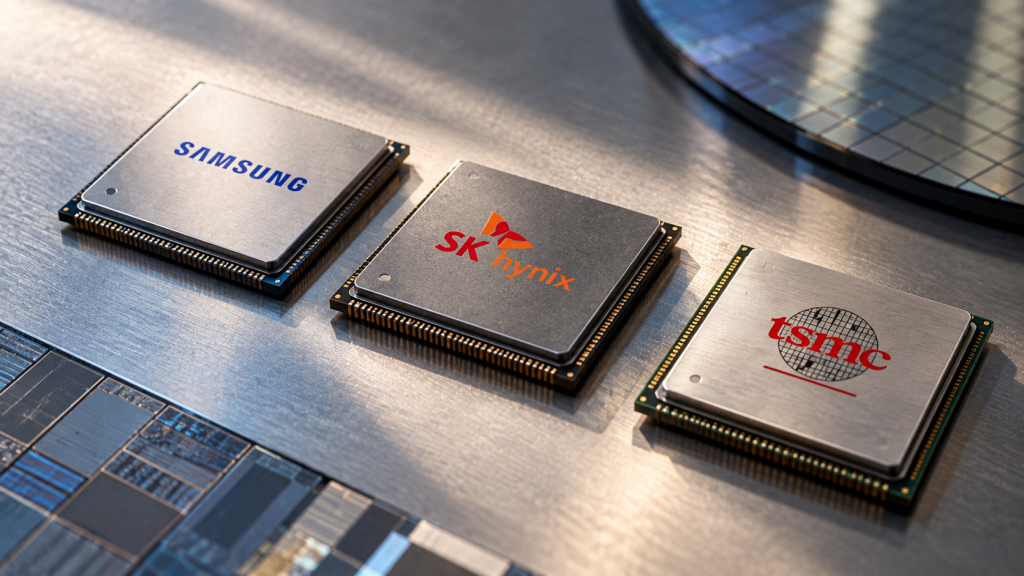
Samsung Electronics and SK Hynix gained 2.4% and 0.8%, respectively, while Taiwan Semiconductor Manufacturing Company (TSMC) rose 1.4%. Japanese technology investor SoftBank advanced 3.4%, helping lift the broader Asian equity market after technology shares suffered steep losses in the previous session.
The recovery came as investors reassessed the recent decline ahead of US inflation data, which could influence expectations for interest rates and the outlook for technology companies.
Chipmakers Recover After Heavy Selling
The previous session had delivered substantial losses across Asian technology markets. South Korea’s Kospi plunged approximately 6%, while reports of technological progress by Chinese memory chipmaker ChangXin Memory Technologies (CXMT) intensified concerns about competition for established semiconductor manufacturers.
Comments from Broadcom Chief Executive Hock Tan, who warned about speculative investment behaviour in the AI sector, also contributed to investor caution.
The subsequent rebound suggests that some market participants viewed the sell-off as an opportunity to buy shares at lower prices. However, a single session of gains does not establish that the broader decline has ended.
AI Demand Continues to Support Semiconductor Stocks
Semiconductor manufacturers remain central to the expansion of artificial intelligence infrastructure. Advanced processors and memory products are required to train AI models, operate data centres and support increasingly complex computing workloads.
Samsung and SK Hynix are major suppliers of memory chips, including high-bandwidth memory used alongside advanced AI processors. TSMC manufactures semiconductors for technology companies worldwide, making its production capacity important to the broader AI supply chain.
These businesses have benefited from rising demand, but investors are increasingly examining whether future earnings can justify elevated valuations and continued investment in manufacturing capacity.
Competition and Financing Remain Key Risks
The emergence of stronger Chinese semiconductor alternatives has added uncertainty for established chipmakers. If domestic suppliers improve manufacturing yields, performance and software compatibility, they could compete more effectively in selected market segments.
At the same time, the AI industry faces questions about financing and profitability. Technology companies are committing substantial capital to computing infrastructure, but investors want clearer evidence that these investments will generate sustainable returns.
Higher interest rates can also weigh on technology valuations by increasing financing costs and reducing the present value of expected future earnings.
US Inflation Data Could Shape the Next Move
Investors were awaiting US consumer price index data on October 14 for further signals about the Federal Reserve’s policy outlook. Persistent inflation could limit the scope for interest rate cuts or increase the possibility of tighter monetary policy, potentially putting renewed pressure on growth-oriented technology stocks.
Conversely, inflation data that eases concerns about borrowing costs could support risk appetite across equity markets.
The semiconductor rebound therefore remains exposed to both company-specific developments and broader economic conditions.
What Investors Will Watch Next
The next phase for semiconductor stocks will depend on earnings results, AI spending plans, competitive developments and changes in interest rate expectations. Investors will also monitor whether the recovery broadens beyond a handful of major technology companies.
For the AI hardware sector, the long-term growth opportunity remains significant, but market performance is likely to depend increasingly on evidence of sustainable demand, profitable investment and resilience against new competition.
