
China Chip Exports Surge as AI Demand Strengthens Semiconductor Trade and Raises Tariff Risks
BEIJING, China, Oct 15, 2026, ZEX PR WIRE — China’s semiconductor exports surged in September as global demand for artificial intelligence infrastructure, memory chips and advanced computing equipment continued to support the country’s technology trade, reinforcing its position in the global electronics supply chain.
Chinese exports rose 36.3% year over year in September 2026, the fastest growth since February, according to customs data reported by Reuters on October 14. Imports also increased 31%, while the monthly trade surplus reached $133.53 billion.
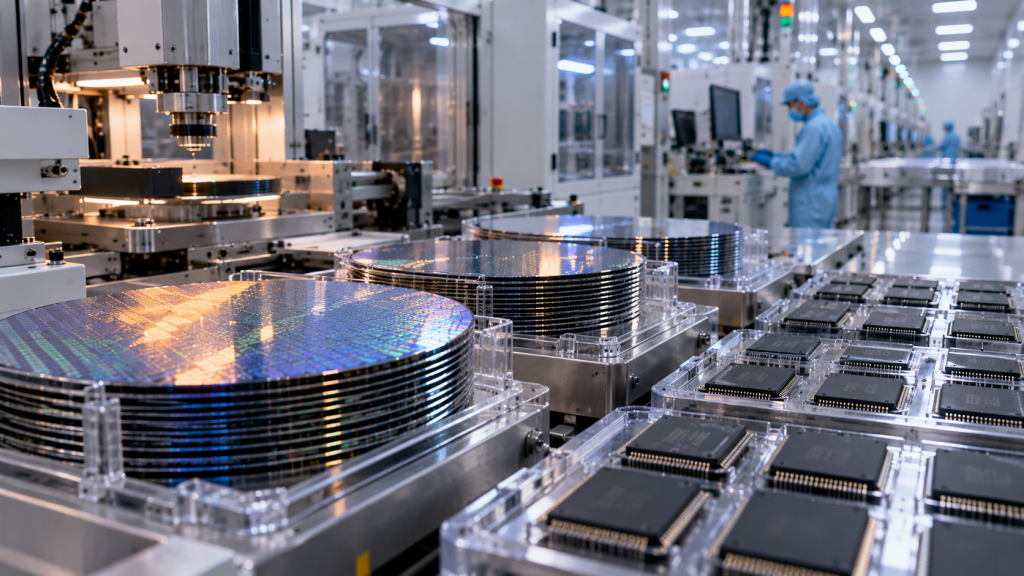
Semiconductors were among the strongest contributors to the export performance. The value of China’s semiconductor exports increased 108.1% year over year during the first nine months of 2026, reflecting strong demand for electronic components used in data centres, consumer devices and industrial systems.
AI Infrastructure Supports Chip Demand
The global expansion of AI computing infrastructure has increased demand for a broad range of semiconductor products, from memory components to processors and supporting electronics. Data centres require substantial quantities of chips, storage equipment, networking components and power management systems.
China’s manufacturers are benefiting from this demand even as geopolitical restrictions continue to limit access to certain advanced chipmaking technologies.
The country remains deeply integrated into global electronics manufacturing, supplying components and finished products to international customers. Strong exports can support factory activity, manufacturing investment and revenue across related industries.
However, the increase in export value does not necessarily represent an equivalent rise in production volumes. Semiconductor prices have also been affected by tight memory supply and increased demand, making it important for investors to distinguish price gains from underlying volume growth.
Trade Surplus Creates a New Challenge
China’s trade surplus reached $938.11 billion during the first nine months of 2026, putting the country on course to exceed the $1 trillion mark for the full year.
Although the export performance supports economic growth, it is also likely to intensify trade tensions with major trading partners. European policymakers have raised concerns about the growing trade imbalance with China and are considering additional measures to protect domestic industries.
The European Union’s recent agreement with Beijing to limit imports of certain hybrid vehicles illustrates the growing pressure for trade adjustments. Semiconductor products, industrial machinery, batteries and other technology goods could remain central to discussions about market access and industrial competition.
Further restrictions could affect exporters, international supply chains and companies that depend on Chinese manufacturing.
What Investors Should Watch
For semiconductor investors, China’s export data provides evidence of continued demand across the electronics supply chain. Manufacturers supplying memory products, electronic components and data centre equipment could benefit if investment in AI infrastructure remains strong.
However, the outlook is not without risks. Export controls, tariffs and geopolitical tensions could alter trade flows or restrict access to important markets. Meanwhile, persistent weakness in Chinese domestic consumption and investment could limit the extent to which export growth translates into a broader economic recovery.
Investors should monitor subsequent customs releases, semiconductor pricing trends and policy developments in the United States and Europe. These indicators will help determine whether the latest export surge reflects durable technology demand or a cycle that remains vulnerable to changing trade conditions.
China’s semiconductor export growth demonstrates the strength of global demand for technology products, but it also highlights the growing intersection between industrial competition, financial markets and international trade policy.
