
China’s CXMT Expands Into NAND Chips as AI Demand Reshapes Global Memory Market
BEIJING, China, September 18, 2026, ZEX PR WIRE — Chinese memory chipmaker ChangXin Memory Technologies, known as CXMT, is preparing to expand into NAND flash production as growing demand from artificial intelligence applications reshapes the global semiconductor industry.
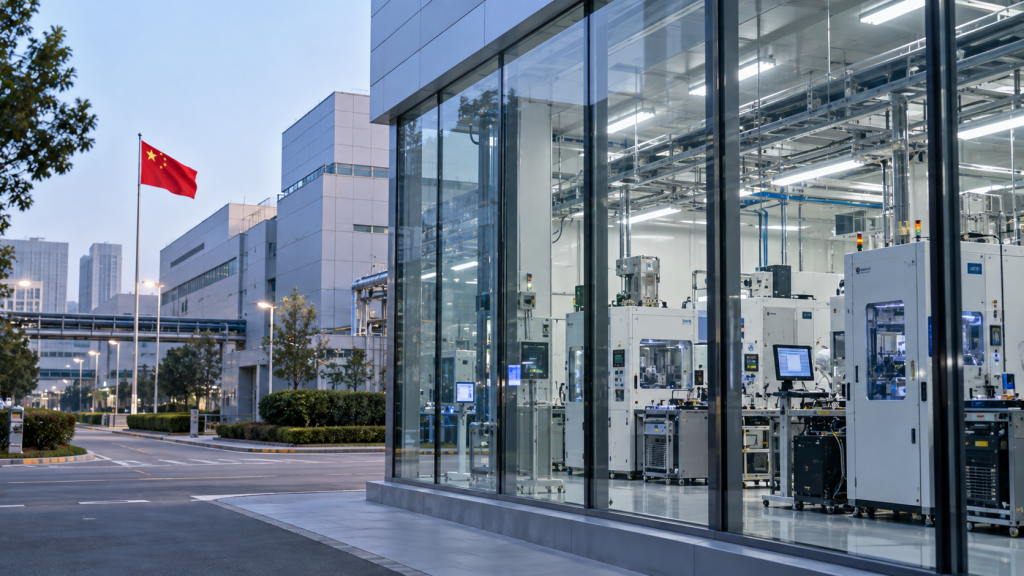
The move would take CXMT beyond its established focus on dynamic random access memory, or DRAM, and place the company in more direct competition with some of the world’s largest memory manufacturers, including Samsung Electronics, SK Hynix and Micron Technology.
Reuters reported that CXMT plans to establish a research and production line for NAND chips at its new facility in Beijing. The company has also started discussions with potential customers, including an artificial intelligence focused startup.
AI Demand Changes the Memory Market
NAND flash memory is widely used in data storage, including solid state drives and other storage systems. The segment has gained additional attention as the rapid expansion of artificial intelligence infrastructure increases demand for data storage alongside computing capacity.
The growing use of AI servers has already placed pressure on parts of the semiconductor supply chain. Companies building large data centers require increasingly sophisticated combinations of processors, memory and storage, creating opportunities for manufacturers across several parts of the chip industry.
CXMT’s planned expansion comes as China continues efforts to strengthen its domestic semiconductor capabilities. The company and Yangtze Memory Technologies Co. have become important parts of Beijing’s effort to develop a more self reliant semiconductor industry.
CXMT raised $8.6 billion through an initial public offering earlier this year, according to Reuters, giving the company additional resources as it expands its operations.
A New Competitive Pressure for Global Chipmakers
Entering NAND would put CXMT into a market already dominated by established manufacturers with years of experience and large production networks.
Samsung, SK Hynix and Micron have invested heavily in memory technology as AI infrastructure has accelerated demand across the semiconductor industry. CXMT’s expansion could add another layer of competition at a time when memory supply and pricing are already receiving increased attention from investors and technology companies.
The development also has a geopolitical dimension. U.S. restrictions on advanced semiconductor technology have made domestic chip production an increasingly important priority for China. Expanding memory manufacturing could help Chinese companies reduce dependence on overseas suppliers while building capabilities that can serve the country’s growing technology sector.
For global semiconductor markets, the significance of CXMT’s move will depend largely on how quickly the company can develop competitive NAND products and bring additional capacity online.
The expansion also highlights a broader change taking place across the technology industry. AI investment is no longer affecting only companies that design processors or build data centers. Rising demand is reaching deeper into the semiconductor supply chain, including memory and storage manufacturers.
As CXMT moves into NAND, the global memory industry could therefore face a new competitive dynamic at a time when AI infrastructure spending is already reshaping demand and investment across the sector.