
China’s Factory Activity Returns to Growth as AI Boom Supports Industrial Demand
SINGAPORE, September 30, 2026, ZEX PR WIRE — China’s manufacturing sector returned to expansion in September, with official data showing factory activity improving after two consecutive months of contraction. The rebound comes as easing weather disruptions helped factories resume operations while continued global demand linked to artificial intelligence provided additional support to industrial activity.
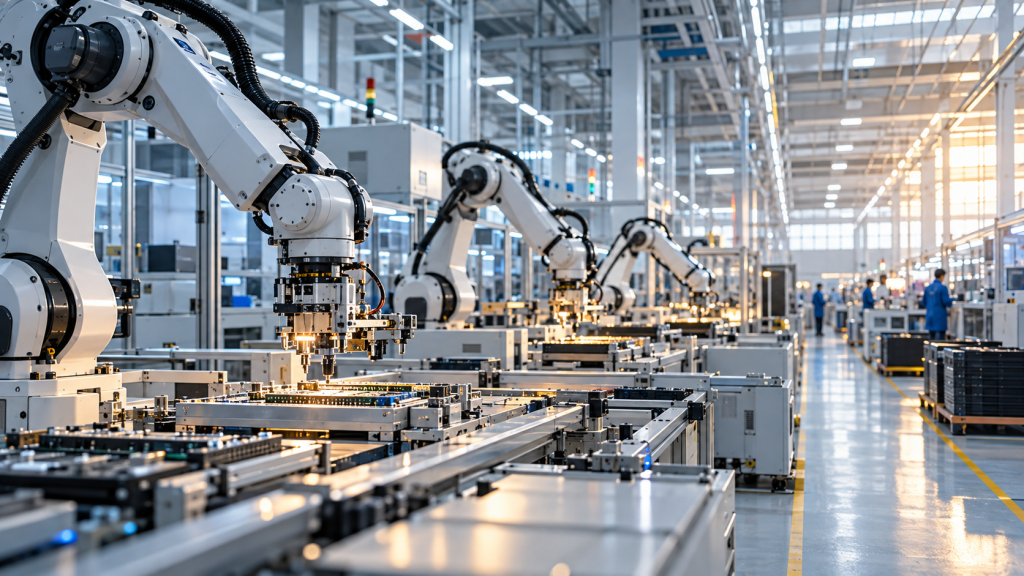
The official manufacturing Purchasing Managers’ Index rose to 50.1 in September from 49.8 in August, according to data from China’s National Bureau of Statistics. A reading above 50 indicates expansion, while a figure below that level signals contraction. The September result matched the median forecast in a Reuters poll.
Production and New Orders Move Higher
Several components of the manufacturing survey pointed to stronger activity during the month. The new orders sub-index rose to 50.5, while the production sub-index reached 51.7.
A separate private survey by RatingDog also indicated improving manufacturing conditions. Its manufacturing PMI climbed to 52.1 in September, the highest reading in five months, compared with 51.5 in August.
The combination of stronger production and new orders suggests that industrial activity gained momentum toward the end of the third quarter. However, the broader economic picture remains uneven, with domestic consumption and investment continuing to face pressure.
China’s services and construction sectors also showed improvement. The official non-manufacturing PMI increased to 50.2 in September from 49.0 in August.
AI Demand Supports Industrial Activity
Artificial intelligence has become an increasingly important source of industrial demand across China’s technology and manufacturing ecosystem. Investment in computing infrastructure, semiconductors, data centers and related equipment is supporting parts of the industrial economy even as other areas face weaker demand.
The trend also highlights the growing connection between China’s manufacturing sector and the global expansion of AI infrastructure. Manufacturers supplying electronics, advanced components and industrial equipment can benefit from rising demand associated with the technology cycle.
At the same time, the recovery is not broad-based enough to remove concerns surrounding the domestic economy. China continues to contend with a prolonged property downturn and subdued household and business confidence.
Policy Support Remains in Focus
Chinese authorities have introduced measures aimed at directing cheaper credit toward sectors including infrastructure and technology while expanding support for home buyers.
The policy response comes as officials attempt to strengthen areas of the economy that have remained under pressure. China’s economy expanded 4.3% in the second quarter, its slowest pace in more than three years, increasing attention on the effectiveness of additional fiscal and monetary support.
Exports and industrial production have remained important sources of economic activity this year, partly offsetting weaker domestic demand. However, trade tensions and geopolitical uncertainty continue to present risks for manufacturers that depend heavily on overseas markets.
China and the United States have also agreed to pursue tariff reductions covering $60 billion worth of goods imported from each other, although several major products were excluded from the proposed measures.
The September PMI improvement therefore provides a stronger industrial reading at the end of the quarter, but the sustainability of the recovery will depend on domestic demand, property-sector conditions, policy support and the continued strength of global technology investment.