
Chinese Stocks Slide as Tech Selloff Deepens on AI Restrictions
Chinese Technology Stocks Lead the Decline
BEIJING, China, September 28, 2026, ZEX PR WIRE — Technology shares were among the biggest losers as investors reacted to the possibility of additional U.S. restrictions affecting components used in artificial intelligence infrastructure.
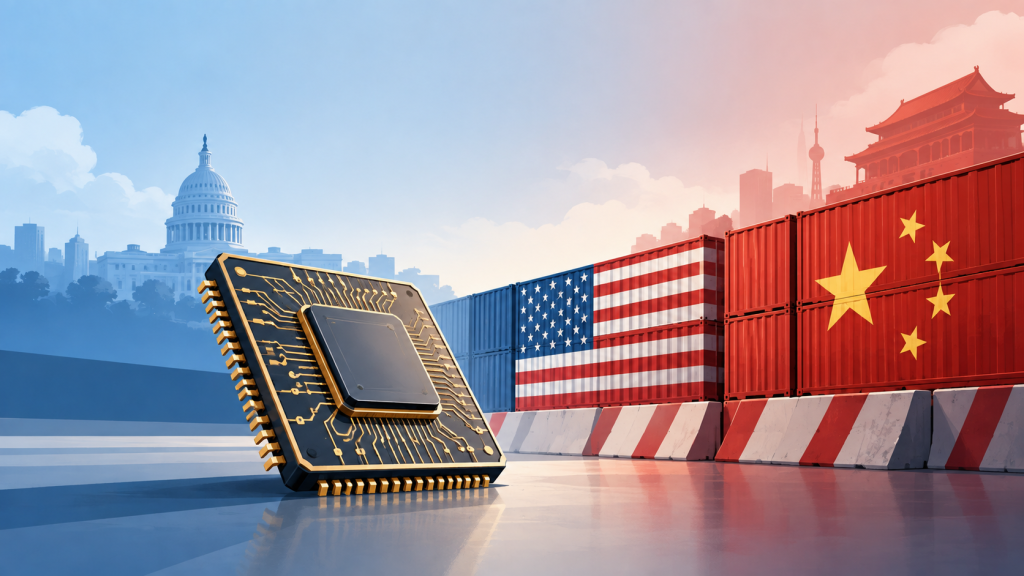
Shares of Chinese optical transceiver manufacturers Eoptolink Technology and Innolight Technology declined sharply. Eoptolink fell about 7% in Shenzhen, while Innolight dropped roughly 9% in both Shenzhen and Hong Kong. The CSI 300 Telecommunications Services Index also fell more than 6%, reaching a two month low.
The moves highlight how sensitive China’s technology sector remains to developments in U.S. policy, particularly in areas connected to AI infrastructure.
CSI 300 Reaches Its Lowest Level in a Year
The CSI 300 declined 2.2% by midday, putting it on course for its steepest daily decline in five weeks. The index reached its lowest level since early September 2025.
The Shanghai Composite also declined 1.7%, while Hong Kong stocks moved in the opposite direction, with the Hang Seng Index gaining around 0.6%.
The divergence reflects differences in investor positioning and the specific companies exposed to the latest technology restrictions.
Chinese markets are also approaching a week long National Day holiday beginning October 1, which has contributed to thinner trading volumes as investors reduce exposure before the market closure.
Technology Tensions Remain Despite Trade Truce Extension
China said Monday that a two month extension of its trade truce with the United States would provide additional time for both sides to assess implementation of their existing arrangements.
However, technology remains one of the areas where disagreements continue.
The latest U.S. restrictions being considered involve Chinese made components used to transmit data in AI data centers. A bipartisan group of U.S. lawmakers introduced legislation on Friday that would prevent the federal government from using certain Chinese made components in sensitive government systems.
The development demonstrates that progress on broader trade discussions has not eliminated disagreements surrounding advanced technology and national security.
Economic Data Adds Another Concern
The market decline was also accompanied by fresh concerns about China’s domestic economy.
Official data showed that industrial profit growth slowed in August, adding to concerns about economic imbalances. Investors are now heading into the National Day holiday with a combination of technology restrictions, softer domestic indicators and geopolitical uncertainty influencing market sentiment.
The coming week will also bring important U.S. economic data, including inflation, employment and GDP figures. Because these releases could influence expectations for U.S. monetary policy, they may affect global markets while Chinese exchanges are closed for the holiday.
For Chinese technology companies, the latest market move shows that the relationship between U.S. policy and the domestic technology sector remains an important factor. Even with a temporary extension of the broader trade truce, restrictions surrounding AI infrastructure continue to create uncertainty for companies operating across the semiconductor and data center supply chain.