
FCC Approves SpaceX Plan for One Million Orbital Data Centre Satellites
WASHINGTON, United States, 26 November 2026, ZEX PR WIRE — SpaceX has received approval from the US Federal Communications Commission to deploy up to one million orbital computing modules designed to operate as data centres in space. The decision marks a significant development in the emerging concept of space-based computing infrastructure and reflects growing interest in alternative ways to meet demand for artificial intelligence processing capacity.
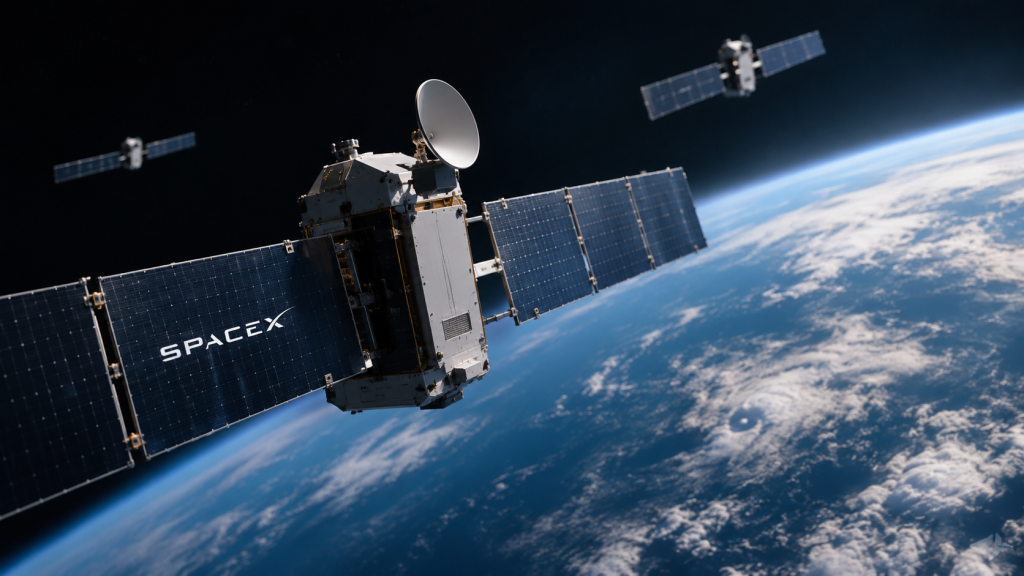
The FCC announced the authorization on November 25, describing the proposed constellation as a network of orbital data centres. The system, referred to as Starmind in the agency’s announcement, is intended to process data in orbit and support computing requirements on Earth.
According to the FCC’s authorization, the satellites will use optical links for communication and radiofrequency systems for backup and command operations. The approval represents a regulatory milestone, but it does not mean that the full constellation has already been deployed or is operational.
Space-based computing enters a new phase
The proposal comes as demand for computing infrastructure continues to increase. AI models and other data-intensive services require substantial processing capacity, prompting technology companies to explore new approaches to power, cooling and data-centre construction.
Traditional data centres require land, electricity, cooling systems and network connectivity. Moving some computing infrastructure into orbit could potentially provide access to solar energy and different thermal conditions. However, the commercial and technical feasibility of operating large-scale computing systems in space remains to be demonstrated.
SpaceX’s proposal is particularly ambitious because of its authorized scale. The FCC said the system could include as many as one million orbital compute modules.
The agency’s decision also comes amid wider interest in orbital infrastructure. Other companies have explored space-based data-centre concepts, suggesting that competition could emerge around the design, launch and operation of such systems.
Execution and orbital sustainability remain key questions
Regulatory approval is only one stage of the project. SpaceX would still need to develop, manufacture, launch and maintain the required infrastructure. The scale of the proposed constellation raises questions about deployment costs, reliability, communications capacity and long-term orbital management.
Space sustainability will also remain an important issue as satellite numbers increase. Regulators and industry participants will need to consider collision risks, orbital debris and the impact of large constellations on other space activities.
For technology investors, the announcement highlights how the AI infrastructure race is expanding beyond conventional data centres and semiconductor manufacturing. Whether orbital computing becomes commercially viable will depend on engineering progress, launch economics and the ability to deliver reliable services at scale.