
Maersk Orders 12 Ultra-Large Container Ships in Fleet Modernisation Push
Copenhagen, Denmark, November 24, 2026, ZEX PR WIRE — Danish shipping group A.P. Moller-Maersk has ordered 12 ultra-large container vessels as part of its fleet modernisation strategy, adding some of the largest ships in its history to its future shipping capacity.
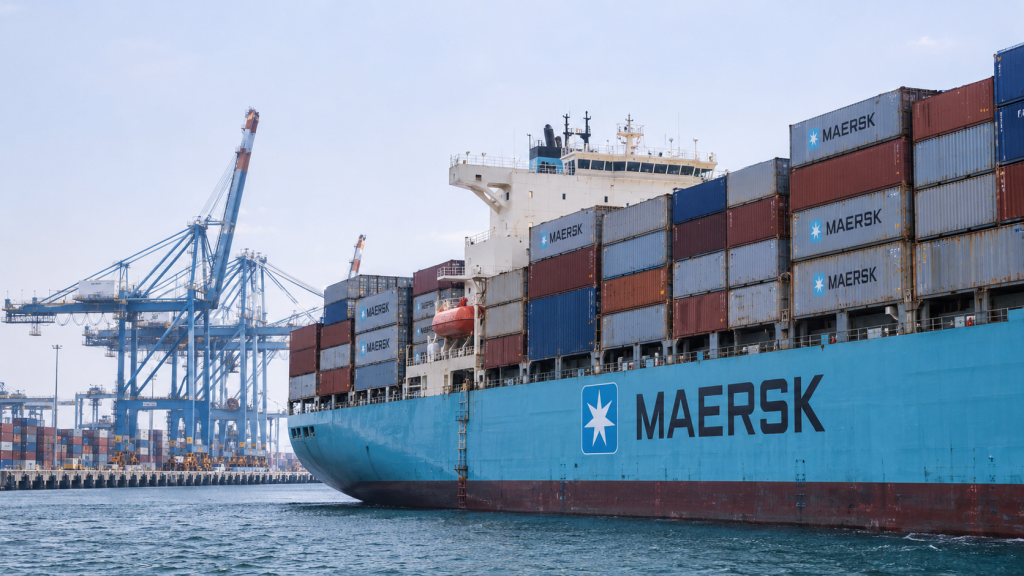
The vessels are scheduled for delivery in 2030 and 2031. Each ship will have capacity for approximately 24,000 twenty-foot equivalent units, or TEUs, placing them among the largest container ships operating in international trade.
Background
The global container shipping industry has been adjusting to changing trade patterns, supply chain disruptions and increasing pressure to improve operational efficiency.
Shipping companies have invested in larger vessels to transport more cargo on major international routes. However, fleet expansion also involves significant capital commitments, fuel efficiency considerations and the need to match vessel capacity with future demand.
Maersk has been modernising its fleet while examining alternative fuels and technologies that could reduce emissions from maritime transport.
Key Developments
A Maersk spokesperson confirmed the order on November 24. The company said the vessels would become the largest ships in its fleet and would be deployed on routes carrying particularly high cargo volumes.
The ships will feature dual-fuel engines capable of operating on conventional bunker fuel or liquefied gas. This provides operational flexibility as the shipping industry continues to evaluate different fuel pathways.
Industry publication TradeWinds reported that the order could be worth up to approximately $2.9 billion. The vessels are expected to be constructed by Chinese shipbuilding companies, including Hengli Heavy Industry and Hudong-Zhonghua Shipbuilding, according to industry reporting.
Maersk said the ships would contribute to the continued modernisation of its fleet and support its competitive position on major international shipping routes.
The delivery schedule, extending into 2030 and 2031, indicates that the company is planning its capacity several years ahead rather than responding only to current shipping demand.
Industry Implications
The order highlights the continuing importance of scale and fuel flexibility in international shipping. Larger container vessels can improve cargo capacity per voyage when operating on routes with sufficient demand and port infrastructure.
The investment also reinforces China’s role in global shipbuilding, particularly in the construction of advanced commercial vessels.
For Maersk, the main challenge will be ensuring that the additional capacity is matched by long term cargo demand and efficient deployment. Larger vessels also require ports and logistics networks capable of accommodating their size.
What’s Next
Investors and shipping industry participants will watch for further details about construction contracts, vessel specifications and the company’s wider fleet investment plans. The ships’ eventual performance will depend on freight demand, fuel economics and the availability of suitable port infrastructure.