
Microsoft Unveils Maia 300 AI Chip as It Targets Lower Data Centre Costs
SAN FRANCISCO, California, Oct 13, 2026, ZEX PR WIRE — Microsoft has introduced Maia 300, the latest generation of its custom artificial intelligence accelerator, as the company seeks to reduce the cost of running AI services and lessen its dependence on external chip suppliers.
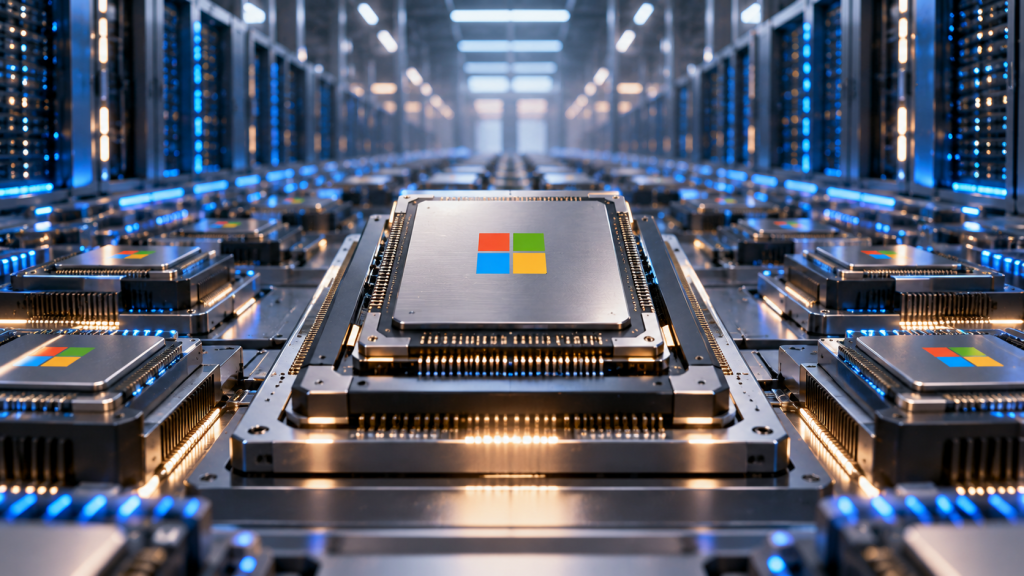
Announced on October 12, 2026, the chip is designed to handle demanding AI workloads, including coding assistance and complex business tasks. Microsoft said it could deploy more than one million Maia 300 chips next year to support its internal AI services, highlighting the scale of investment required to meet growing demand for computing capacity.
The development reflects a broader shift among major cloud providers, which are designing their own processors to improve performance, control infrastructure costs and gain greater flexibility over their AI systems.
Why Microsoft Is Developing Its Own Chips
AI services require substantial computing resources to train models and generate responses. As usage increases, the cost of powering and operating these systems becomes a major consideration for cloud providers.
Custom accelerators give companies more control over how hardware is designed for specific workloads. Rather than relying exclusively on commercially available processors, Microsoft can tailor its chips to the needs of its software, data centres and AI applications.
The strategy does not eliminate the need for external suppliers. Building a successful AI chip ecosystem requires semiconductor manufacturing partners, advanced packaging, memory, networking equipment and specialised software. Microsoft must also ensure its custom hardware works effectively with the systems used by developers and enterprise customers.
Competition in AI Infrastructure Intensifies
Microsoft’s investment places it in a competitive field alongside other technology companies developing specialised silicon. Cloud providers increasingly view custom processors as a way to improve efficiency while differentiating their AI infrastructure.
The market has historically relied heavily on GPUs and other accelerators from established chipmakers. However, as AI workloads become more diverse, technology companies are exploring hardware designed for particular tasks, including model inference and large-scale data processing.
A successful custom chip programme could help Microsoft manage operating expenses and improve the economics of delivering AI services. The benefits will depend on performance, energy efficiency, manufacturing costs and how effectively the chips can be deployed at scale.
The Financial Stakes Are Rising
Developing custom silicon requires substantial upfront investment in engineering, software support and infrastructure. Large-scale deployment also depends on manufacturing capacity and reliable supplies of components.
Microsoft must therefore balance the potential savings from custom hardware against the costs and risks of building an alternative technology platform. Delays, production constraints or weaker-than-expected performance could limit the financial benefits.
Investors are paying closer attention to AI capital expenditure as technology companies commit billions of dollars to data centres, chips and electricity infrastructure. Greater efficiency could help justify these investments, but companies still need to demonstrate that AI revenue can support long-term spending.
What Investors Will Watch Next
The planned deployment of more than one million Maia 300 chips would represent a substantial expansion of Microsoft’s custom computing strategy. Investors will monitor implementation progress, performance gains and evidence that the new hardware can reduce the cost of delivering AI services.
The announcement also underscores a key trend in the technology sector: competition is moving beyond AI models toward the entire infrastructure stack, from processors and networking to software and energy.
For Microsoft, the challenge is to turn its custom silicon investment into measurable improvements in efficiency, reliability and profitability as demand for AI computing continues to grow.
