
Microsoft Withdraws From UK Data Centre Agreement as Power Delays Complicate AI Expansion
LONDON, United Kingdom, October 19, 2026, ZEX PR WIRE — Microsoft has withdrawn from an agreement to anchor a major UK data centre project being developed by Nscale after delays to the site’s electricity connection disrupted the planned supply schedule. The development highlights the practical challenges facing technology companies seeking to expand AI computing capacity as demand for data centre infrastructure continues to grow.
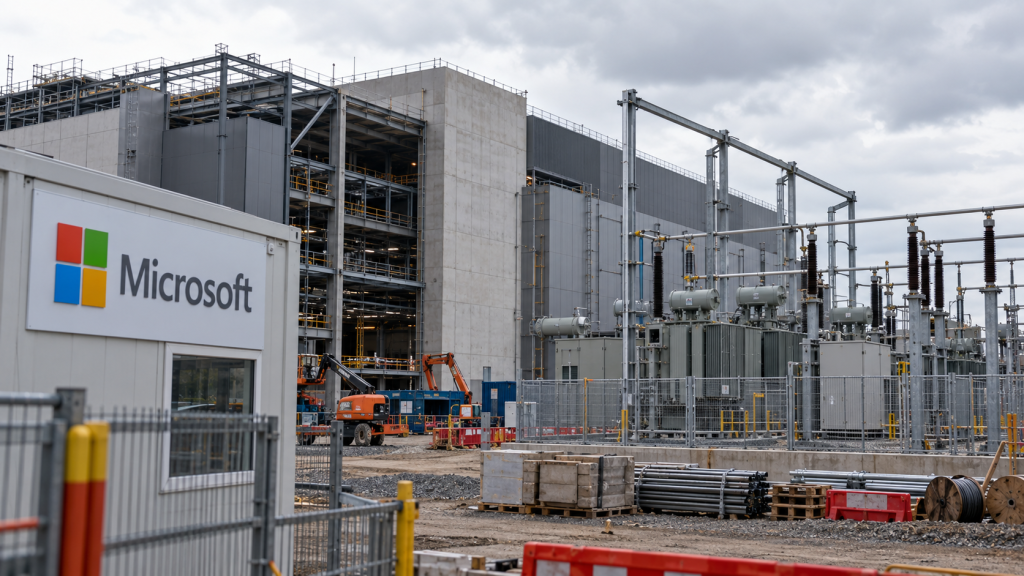
The project was intended to form part of the UK’s expanding AI infrastructure ecosystem. Reuters reported on October 19 that Microsoft pulled out after power delays pushed back the expected supply timeline. Nscale was also in discussions with Anthropic regarding a separate potential AI cloud deal involving a second large facility.
Electricity access becomes a critical constraint
Modern data centres require substantial electricity to operate servers, cooling systems and networking equipment. As AI workloads become more computationally intensive, the availability of reliable power has become a key factor in determining where facilities can be built and when they can begin operations.
A project may have funding, land and customer interest in place but still face delays if grid connections or supporting infrastructure are not ready.
For technology companies, this can create a mismatch between the timing of planned computing capacity and customer demand. For developers, delays can increase financing costs and postpone the revenue expected from new facilities.
The commercial risks of AI infrastructure
The withdrawal illustrates that AI infrastructure expansion involves more than acquiring advanced processors and building server halls. It requires coordination between developers, electricity providers, equipment suppliers and customers.
Large facilities often require significant capital commitments before they become operational. If delivery schedules change, customers may reassess their agreements or seek alternative providers.
Such risks are especially relevant to infrastructure developers that rely on a small number of large customers to support investment plans.
The economics of a data centre therefore depend on construction costs, power availability, financing terms and the timing of customer contracts, as well as demand for AI computing.
Competition for capacity continues
Despite the setback, interest in AI computing remains a major strategic consideration for cloud providers and AI developers. Companies are seeking capacity to train and run models, support enterprise applications and deliver AI services to customers.
However, projects must demonstrate that they can deliver capacity on commercially useful schedules. Delays can affect a developer’s reputation and create uncertainty about future cash flows.
The discussions involving Nscale and Anthropic underline the importance of securing infrastructure that meets customers’ technical and operational requirements.
What investors will monitor
Investors will look for updates on Nscale’s development pipeline, its customer agreements and the timetable for securing adequate power capacity.
For Microsoft, the withdrawal underscores the importance of managing infrastructure commitments against realistic delivery schedules. More broadly, the situation demonstrates that the growth of AI computing remains dependent on physical infrastructure and electricity supply.
As data centre investment expands, the ability to deliver power on time could become as important as access to chips and software.