
Samsung Electronics and SK Hynix Lead Asian Rally as AI Chip Demand Returns to Focus
SEOUL, South Korea, October 27, 2026, ZEX PR WIRE — South Korean equities advanced on Tuesday as semiconductor shares strengthened, with Samsung Electronics and SK Hynix among the companies benefiting from renewed interest in artificial intelligence infrastructure and technology earnings.
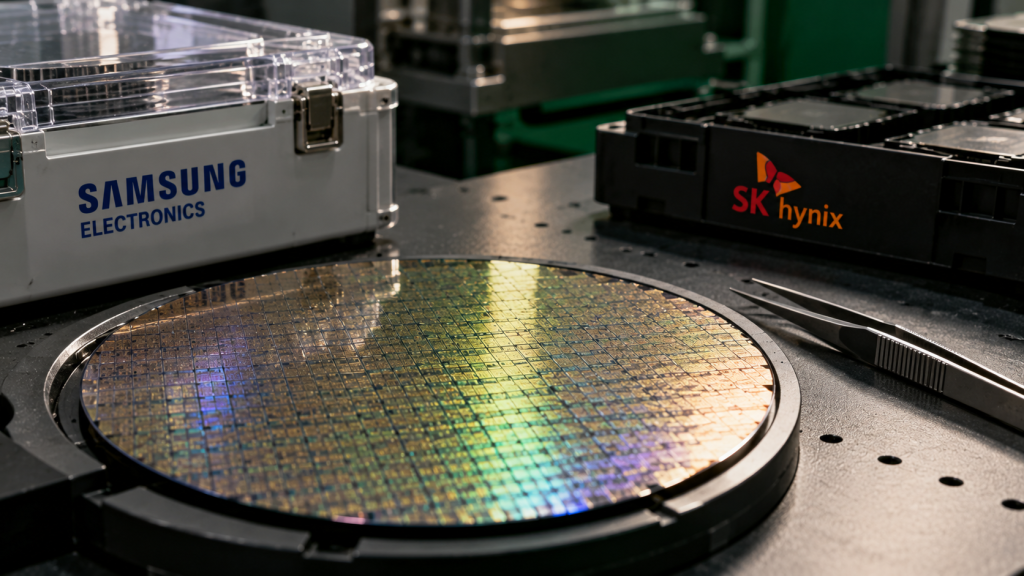
The Kospi rose 3.6% during Tuesday’s Asian trading session, with SK Hynix gaining approximately 7% and Samsung Electronics rising 4.8%. Japan’s Nikkei 225 also advanced 2.2%, while the technology equipment manufacturer Advantest climbed more than 10%, according to Associated Press market reporting.
Memory chips remain central to AI infrastructure
AI systems depend on more than processors used to train and operate models. They also require high bandwidth memory, storage, networking equipment and other components that support large computing workloads.
Samsung Electronics and SK Hynix are major participants in the global memory chip industry. Their performance is influenced by demand from data centres, consumer electronics manufacturers and other technology customers.
As companies invest in AI infrastructure, demand for specialised memory can support pricing and production plans. However, semiconductor markets remain cyclical, and manufacturers must balance capacity expansion against the possibility of future oversupply.
Earnings could clarify demand conditions
The latest market recovery comes ahead of quarterly results from major technology companies, including Alphabet, Microsoft and Amazon.
Their earnings and management commentary may provide additional insight into spending on data centres, AI workloads and cloud computing. Strong demand could support suppliers of memory chips and semiconductor equipment, while weaker spending expectations could place pressure on the sector.
Investors will also consider how much of the anticipated growth is already reflected in share prices.
Competition and capital expenditure
Memory chip manufacturers must invest heavily in research, production equipment and advanced manufacturing processes. The pace of technological change requires continuous spending to maintain competitiveness.
At the same time, higher production capacity can create pricing pressure if supply grows faster than demand. Companies must therefore manage capital expenditure carefully while responding to changes in customer requirements.
The sector’s performance depends on the interaction between AI demand, traditional electronics markets, manufacturing efficiency and global trade conditions.
What investors will monitor
Investors will look for evidence that AI related demand is translating into stronger chip sales and sustainable profit margins.
The Asian market rebound suggests renewed interest in semiconductor companies, but the direction of the sector will depend on forthcoming earnings, pricing trends and investment plans. The latest gains alone do not establish a long term recovery.