
SK Hynix signals memory shortages could continue until 2030 as AI demand expands
SEOUL, South Korea, October 30, 2026, ZEX PR WIRE — SK Hynix has warned that shortages of advanced memory chips could persist through 2030 as artificial intelligence adoption increases demand for high bandwidth memory and conventional DRAM. The outlook follows record third quarter results, reinforcing the company’s position as one of the major beneficiaries of expanding AI infrastructure investment.
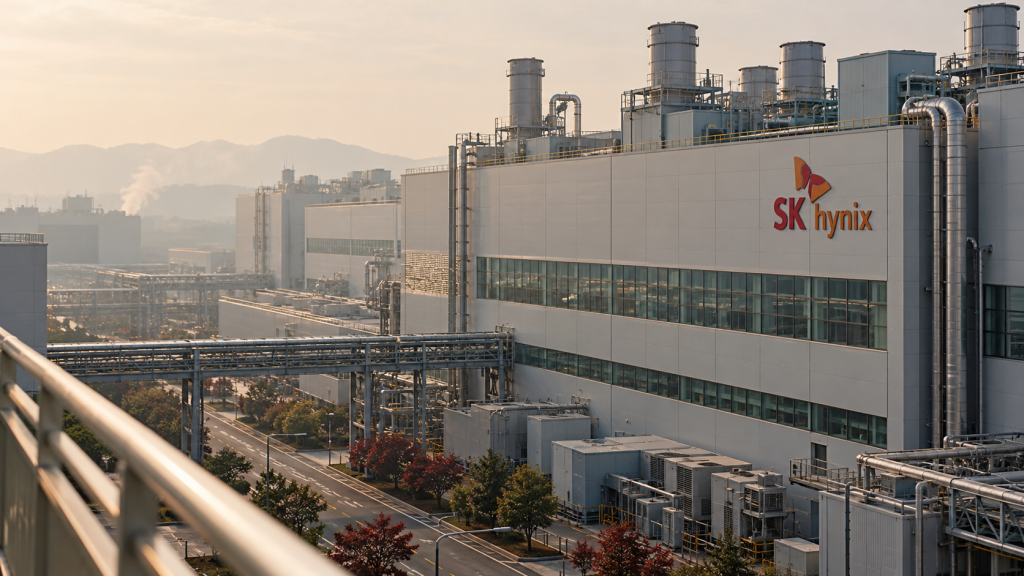
The company reported third quarter revenue of 104.62 trillion Korean won and operating profit of 39.78 trillion won. Its operating margin reached a record 80%, supported by stronger memory prices and demand from customers building AI computing systems.
AI adoption is extending the memory cycle
Demand for high bandwidth memory has become a major growth driver for SK Hynix. These specialised chips are used alongside advanced processors in AI accelerators, where fast data movement is necessary to support demanding computing workloads.
The company’s outlook suggests that supply constraints are not simply a short term consequence of higher demand. Manufacturing advanced memory requires complex processes, substantial investment and time to expand production capacity. Meanwhile, the growing use of AI in robotics, autonomous driving and other applications could create additional demand beyond traditional data centres.
SK Hynix also indicated that more than half of its expected production for 2027 and 2028 is already covered by long term contracts. This provides visibility into future customer demand, although it also limits the amount of capacity available for new orders.
Strong earnings support shareholder returns
The company’s record profitability has created room for a substantial shareholder return programme. SK Hynix announced plans involving approximately 100 trillion won in shareholder returns this year, including dividends and share repurchases.
The move comes at a time when investors are paying closer attention to how semiconductor companies allocate cash generated during the AI investment cycle. Strong demand can support higher earnings, but the industry must also reinvest heavily in research, manufacturing equipment and new production facilities.
What investors will monitor next
The central question is whether SK Hynix can maintain its pricing strength while increasing production. Investors will also assess how long customers continue committing to advanced memory purchases and whether additional capacity eventually reduces supply pressure.
The outlook provides a positive signal for the semiconductor supply chain, but the company’s long term performance will depend on maintaining technological leadership and managing the capital requirements of a rapidly expanding market.