
Top 10 SOC 2 Compliance Tools to Consider Before Your Next Audit (2026)
Let me be honest: preparing for a SOC 2 audit can feel overwhelming.
You’re juggling evidence collection, tracking controls across dozens of systems, chasing down screenshots, and trying to keep everything organized in spreadsheets that seem to multiply overnight. And when audit season arrives, you’re scrambling to prove you’ve been compliant all year.
I’ve seen this scenario play out countless times with growing tech companies. The good news? SOC 2 compliance tools exist to transform this chaotic process into something manageable, even streamlined.
In this guide, I’m walking you through 10 of the best SOC 2 compliance tools available today. You’ll get everything you need to compare platforms and make the right choice for your business.
Let’s get started.
| SOC 2 Compliance Tool | Best For | Pricing Starts From |
| Scytale | End-to-End SOC 2 Audit Readiness and Compliance with Expert Guidance | Custom pricing |
| Secureframe | Cross-Framework Compliance Intelligence | $8,000/year |
| Thoropass | Built-In Auditor Collaboration | Custom pricing |
| LogicGate | Configurable Compliance Workflows | Custom pricing |
| Sprinto | Guided Onboarding for First-Time Audits | Custom pricing |
| OneTrust | Integrated Trust & Privacy Management | Custom pricing |
| Scrut Automation | Multi-Framework Automation | Custom pricing |
| AuditBoard | Enterprise GRC Suite | Custom pricing |
| Anecdotes | Continuous Control Monitoring | Custom pricing |
| Vanta | Extensive Integration Depth | $10,000/year |
Which Is the Best SOC 2 Compliance Tool?
Short on time? Want to see the standout tools before reading everything? I’ve got you covered. Here are the three platforms that impressed me most.
- Scytale: A comprehensive AI-powered solution for scaling companies tackling SOC 2 and other critical security and privacy frameworks, while managing GRC processes more efficiently. What sets it apart is the combination of powerful automation, hands-on guidance from dedicated GRC experts who walk you through every step, and a next-gen AI GRC agent, Scy, removing the guesswork for teams without in-house compliance expertise.
- Secureframe: If you’re planning to pursue multiple frameworks (SOC 2,, HIPAA, PCI DSS), Secureframe does a good job at reusing evidence and controls across frameworks. The platform’s cross-framework intelligence means you won’t duplicate effort as you expand your compliance program.
- Scrut Automation: A unified platform for managing SOC 2 alongside other frameworks like ISO 27001,, or PCI DSS. The continuous monitoring tracks evidence across your entire infrastructure while vendor risk management automates third-party assessments.
For a deeper look at each platform, check out the detailed comparison below.
List of the Top 10 SOC 2 Compliance Tools for 2026
When I searched “SOC 2 compliance software” online, the results were confusing. Half the tools claimed to automate compliance but really just offered document templates. Others promised “SOC 2 readiness” but were basically glorified task lists.
I wanted real solutions that actually work.
So I reached out to security leaders, compliance managers, and founders at scaling tech companies. I asked them what SOC 2 tools they use and what makes them worth it.
The 10 platforms below earned their spot based on actual user experience, not flashy marketing.
Let’s dive into the details.
1. Scytale: Best for End-to-End SOC 2 Readiness for Scaling Companies
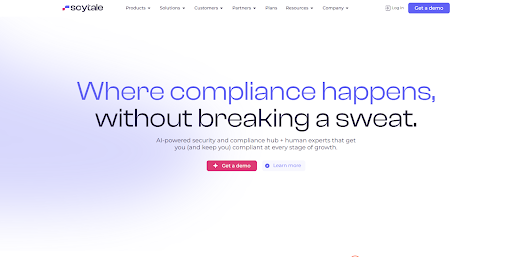
When it comes to SOC 2 compliance platforms, Scytale brings something different to the table. It combines AI-powered, enterprise-grade automation with actual human expertise.
What caught my attention immediately was how the platform handles the full compliance lifecycle. Scytale doesn’t just collect evidence. It monitors your controls continuously, flags gaps before they become audit issues, and manages vendor risk in one centralized hub.
But here’s what really sets it apart. You’re not navigating this alone. Scytale pairs its powerful technology with dedicated GRC experts who guide you from readiness through audit completion and ongoing compliance. For teams without an in-house compliance function, this is a game changer.
The platform also features Scy, a unique, next-gen AI GRC agent that provides real-time answers, task guidance, and remediation suggestions throughout your compliance journey. Think of it as having a compliance assistant available 24/7.
Pros:
- Automated evidence collection seamlessly pulls data from your tech stack and keeps it continuously updated
- Continuous control monitoring flags misconfigurations and drift before they become audit problems
- User access reviews streamline periodic access audits with automated collection and approvals
- Multi-framework cross-mapping lets you manage SOC 2, ISO 27001, ISO 42001, HIPAA, and GDPR without duplicating work
- Dedicated GRC experts provide hands-on guidance throughout the entire compliance process
- AI GRC agent (Scy) offers real-time compliance support and remediation suggestions
Cons:
- Custom pricing may be higher than entry-level security tools
Integrations: GitHub, Google Workspace, Slack, Okta, MongoDB, AWS, Azure, and hundreds more, with custom integration options.
G2 Rating: 4.9/5
Capterra Rating: 4.8/5
“Scytale’s expert guidance made our first SOC 2 audit feel manageable. The automation saved us weeks of manual work, and having someone to answer our questions along the way was invaluable.” — Security Lead, B2B SaaS Company
Pricing: Custom pricing based on company size and frameworks.
Website: https://scytale.ai/
2. Secureframe: Best for Cross-Framework Intelligence
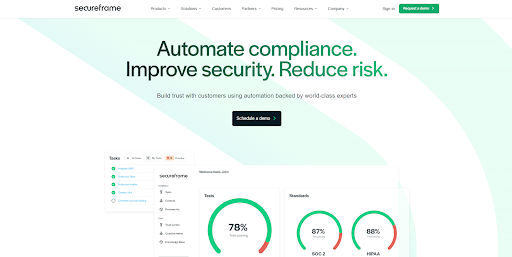
Secureframe excels at helping scaling companies consolidate compliance efforts across multiple frameworks. If you’re pursuing SOC 2 today but know you’ll need ISO 27001 or HIPAA tomorrow, this platform is built for that journey.
The software’s cross-framework intelligence automatically reuses evidence and controls between standards, which means you’re not starting from scratch each time you add a new certification.
I was impressed by the integrated asset inventory that tracks systems, users, and vendors to ensure complete visibility. The automated policy builder creates policies aligned with SOC 2 and ISO 27001 based on your actual integrations. No generic templates.
Pros:
- Cross-framework intelligence reuses evidence across SOC 2, ISO 27001, PCI DSS, and HIPAA
- Integrated asset inventory tracks systems, users, and vendors for complete visibility
- Live compliance status dashboards flag non-compliant controls in real time
- Automated policy builder creates framework-aligned policies based on your tech stack
- Auditor workspace enables direct collaboration without leaving the platform
Cons:
- Starting price point may be steep for early-stage startups
- Some advanced features require higher-tier plans
Integrations: AWS, Google Workspace, Okta, GitHub, Jira, and more.
G2 Rating: 4.6/5
“Secureframe transformed how we handle multiple certifications. Being able to map one control to SOC 2, HIPAA, and ISO at the same time saved our engineering team dozens of hours of repetitive work.” — CTO, HealthTech Startup
Pricing: Starting from approximately $8,000 per year.
3. Thoropass: Best for Built-In Auditor Collaboration
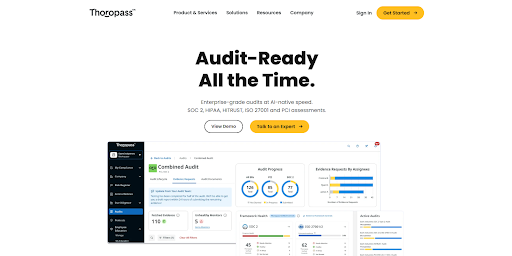
Thoropass (formerly Laika) bridges the gap between compliance software and audit firms. The platform connects directly with licensed auditors for seamless collaboration and document sharing.
What stood out to me was the automated control mapping that links your existing tech stack to SOC 2 and ISO 27001 requirements automatically. The real-time audit readiness tracker shows which controls are ready and which need remediation at a glance.
The compliance calendar tracks milestones, deadlines, and audit windows automatically, so nothing falls through the cracks.
Pros:
- Built-in auditor access for direct collaboration and document sharing
- Automated control mapping links your tech stack to SOC 2 requirements
- Real-time audit readiness tracker shows control status visually
- Policy management with editable templates and review workflows
- Compliance calendar automatically tracks milestones and deadlines
Cons:
- Custom pricing requires sales contact
- May have fewer integrations than some competitors
Integrations: AWS, Azure, Google Workspace, GitHub, and others.
G2 Rating: 4.5/5
“The transparency Thoropass provides between our team and the auditors is a breath of fresh air. We no longer have to guess what the auditor needs; the platform makes the requirements clear.” — VP of Engineering, FinTech Firm
Pricing: Custom pricing based on needs.
4. LogicGate: Best for Configurable GRC Workflows
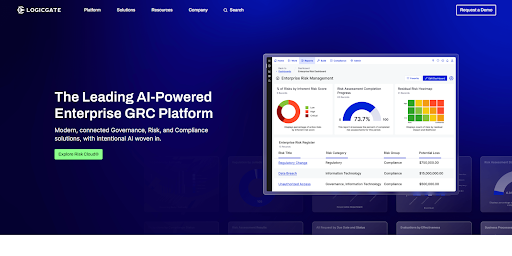
LogicGate offers full configurability for teams managing multiple frameworks and complex risk functions. If your organization needs a flexible solution that adapts to changing governance requirements, this platform delivers.
The configurable GRC workflows let you build and customize processes for control testing, approval, and remediation. Automated risk scoring calculates risk based on severity, likelihood, and asset importance.
I appreciated the centralized control library that stores evidence, owners, and activity history for full traceability.
Pros:
- Configurable GRC workflows for control testing and remediation processes
- Automated risk scoring based on severity, likelihood, and asset importance
- Third-party integrations with Jira, ServiceNow, and Slack for task management
- Centralized control library stores evidence and activity history
- Advanced analytics provide dashboards for compliance KPIs and risk heat maps
Cons:
- Configuration complexity may require dedicated admin resources
- Learning curve for teams new to GRC platforms
Integrations: Jira, ServiceNow, Slack, and more.
G2 Rating: 4.7/5
“LogicGate gave us the flexibility to build a compliance program that actually fits our unique business processes rather than forcing us into a rigid box.” — Head of Compliance, Global Logistics Provider
Pricing: Custom pricing.
5. Sprinto: Best for Guided Onboarding
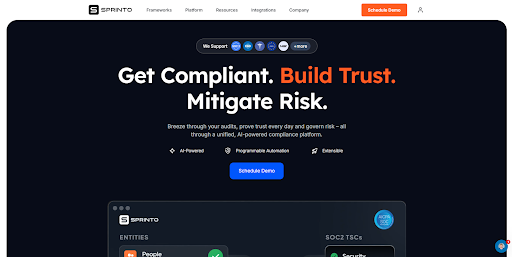
Sprinto is built for speed and simplicity, making it perfect for teams new to SOC 2 audits. The guided onboarding walks you through setup with pre-configured SOC 2 and ISO 27001 controls.
Continuous monitoring tracks system configurations and employee access across cloud platforms. Automated alerts flag non-compliant changes and assign corrective actions automatically.
The visual progress tracker displays audit readiness by control and department, giving you a clear picture of where you stand.
Pros:
- Guided onboarding with step-by-step setup and pre-configured controls
- Continuous monitoring tracks configurations and access across cloud platforms
- Automated alerts flag non-compliant changes and assign corrective actions
- Remediation tracking assigns tasks, sets deadlines, and verifies fixes
- Dedicated support team provides hands-on guidance throughout preparation
Cons:
- May lack advanced features for enterprises
- Custom pricing requires contact
Integrations: AWS, Google Workspace, Azure, Okta, and more.
G2 Rating: 4.6/5
“For our first SOC 2, we were completely lost. Sprinto’s onboarding felt like having a personal trainer for compliance. They broke it down into small, daily tasks we could actually finish.” — Founder, Early-Stage SaaS
Pricing: Custom pricing.
6. OneTrust: Best for Integrated Trust & Privacy Management
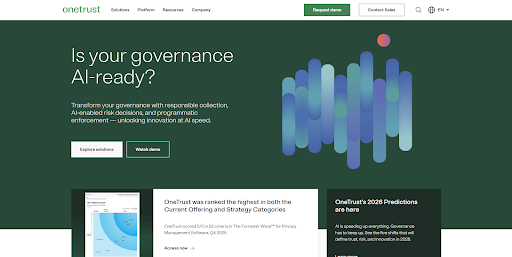
OneTrust has evolved into one of the most comprehensive GRC ecosystems available. It’s designed for companies that need to unify security, privacy, and compliance under one platform.
The integrated trust platform combines security, privacy, and compliance management in a unified workspace. Automated policy and control mapping builds and maintains policies aligned with SOC 2, ISO 27001, GDPR, and HIPAA.
OneTrust extends beyond SOC 2 into broader data protection and privacy compliance, making it ideal for organizations with complex regulatory requirements.
Pros:
- Integrated trust platform unifies security, privacy, and compliance
- Automated policy and control mapping across multiple frameworks
- Vendor risk management centralizes third-party assessments and risk scoring
- Privacy and data governance extends beyond SOC 2 compliance
- Audit collaboration tools enable review and approval within the platform
Cons:
- Enterprise pricing may be prohibitive for smaller companies
- Platform complexity requires dedicated training
Integrations: Extensive enterprise integrations across cloud, SaaS, and business applications.
G2 Rating: 4.4/5
“OneTrust is the gold standard if you need to manage GDPR alongside SOC 2. The depth of visibility into our data privacy and vendor risk is unmatched.” — Chief Information Security Officer, Enterprise Retailer
Pricing: Custom enterprise pricing.
7. Scrut Automation: Best for Multi-Framework Automation
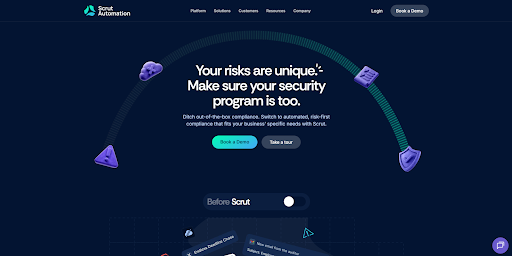
Scrut gives scaling organizations a single source of truth for compliance. The platform covers SOC 2, ISO 27001, GDPR, HIPAA, and PCI DSS in one unified system.
Continuous control monitoring tracks evidence across infrastructure, SaaS tools, and endpoints. Vendor and risk management evaluates third-party risks with automated assessments and dashboards.
The collaborative audit workspace lets teams and auditors work together on evidence and findings seamlessly.
Pros:
- Multi-framework automation covers SOC 2, ISO 27001, GDPR, HIPAA, and PCI DSS
- Continuous control monitoring tracks evidence across infrastructure and SaaS
- Vendor and risk management with automated assessments
- Centralized reporting delivers compliance metrics in real time
- Alerting and remediation detects control failures and assigns fixes automatically
Cons:
- Custom pricing requires sales engagement
- May have learning curve for complex setups
Integrations: AWS, Google Workspace, Azure, Okta, and more.
G2 Rating: 4.6/5
“Scrut has become our single source of truth. The continuous monitoring means we aren’t just ‘compliant’ once a year; we are secure every single day.” — Director of IT Operations, EdTech Company
Pricing: Custom pricing.
8. AuditBoard: Best for Enterprise GRC Suite
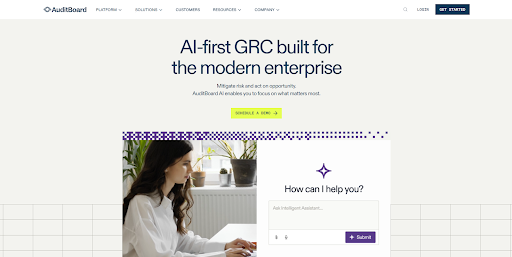
AuditBoard is built for mature compliance programs that require scale and visibility. The comprehensive GRC suite unites audit, risk, and control management in one platform.
Workflow automation streamlines evidence collection, testing, and approvals. Centralized documentation keeps policies, controls, and reports organized across departments.
Advanced analytics visualize compliance health, audit trends, and risk exposure with customizable dashboards.
Pros:
- Comprehensive GRC suite unites audit, risk, and control management
- Workflow automation streamlines evidence collection and approvals
- Centralized documentation organizes policies and reports across departments
- Advanced analytics visualize compliance health and risk exposure
- Multi-entity reporting supports global organizations managing multiple frameworks
Cons:
- Enterprise pricing may be out of reach for smaller companies
- Platform complexity requires training and admin resources
Integrations: Major enterprise platforms and business applications.
G2 Rating: 4.6/5
“AuditBoard transformed our internal audit process. We’ve moved from chasing spreadsheets to a system that gives our board real-time visibility.” — Internal Audit Manager, Publicly Traded Tech Co.
Pricing: Custom enterprise pricing.
9. Anecdotes: Best for Continuous Control Monitoring
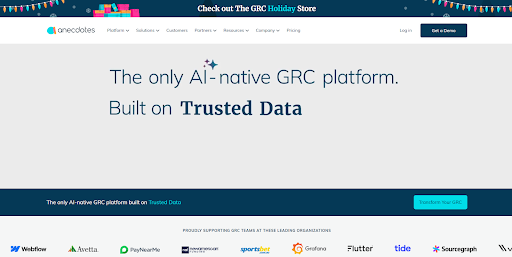
Anecdotes focuses heavily on continuous monitoring and real-time compliance visibility. The platform excels at detecting control drift and configuration changes as they happen.
Real-time monitoring tracks security controls across your infrastructure continuously. Automated alerts notify you immediately when controls fail or configurations drift from compliance standards.
The platform provides detailed audit trails and evidence collection for demonstrating compliance over time.
Pros:
- Continuous control monitoring detects drift in real time
- Automated alerts for control failures and configuration changes
- Detailed audit trails for compliance demonstration
- Integration with major cloud and SaaS platforms
- Evidence collection automation
Cons:
- May lack some enterprise-level features
- Smaller integration library than industry leaders
Integrations: AWS, Google Workspace, Azure, and other major platforms.
G2 Rating: 4.6/5
“Anecdotes took the ‘manual’ out of evidence collection. The platform pulls raw data directly and turns it into audit-ready evidence automatically.” — Security Engineer, Cybersecurity Scale-up
Pricing: Custom pricing.
10. Vanta: Best for Extensive Integration Depth
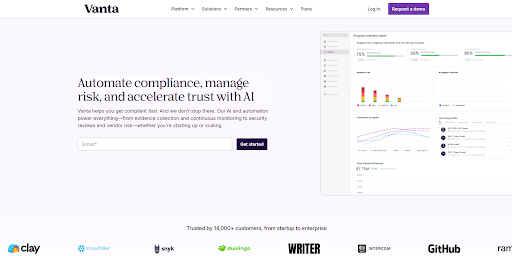
Vanta offers unmatched integration depth and automation coverage. With connections to over 250 SaaS, cloud, and developer tools, the platform automates evidence collection at scale.
Continuous control monitoring tracks configurations, access permissions, and vulnerabilities in real time. The pre-built control library offers standardized mappings for SOC 2, ISO 27001, and HIPAA to speed up readiness.
Vanta’s reports and evidence exports are trusted by auditors worldwide, making it a reliable choice for companies scaling fast with diverse tech stacks.
Pros:
- Extensive integrations with 250+ SaaS, cloud, and developer tools
- Continuous control monitoring tracks configurations and vulnerabilities in real time
- Pre-built control library with standardized framework mappings
- Automated remediation alerts flag failed configurations with corrective recommendations
- Partner network includes vetted auditors and pen-test providers
Cons:
- Higher price point compared to some alternatives
- Some features require premium tiers
Integrations: 250+, including AWS, Azure, Google Workspace, GitHub, and more.
G2 Rating: 4.7/5
“Vanta is the industry standard for a reason. Their depth of integrations meant we didn’t have to change a single tool in our stack to get compliant.” — VP of Operations, AI Research Lab
Pricing: Starting from approximately $10,000 per year.
Evaluation Criteria
I evaluated these SOC 2 compliance tools using a systematic approach across six key factors:
- User Reviews / Ratings: I analyzed feedback from real users on G2, Capterra, and other review platforms to understand satisfaction levels and common pain points.
- Essential Features & Functionality: I assessed each platform’s core capabilities, evidence automation, continuous monitoring, vendor risk management, and audit readiness, to determine practical usefulness.
- Ease of Use: I evaluated the user interface, onboarding process, and learning curve to ensure accessibility for teams of varying technical expertise.
- Customer Support: I examined the quality and availability of support, including access to compliance experts, documentation, and response times.
- Value for Money: I compared pricing against features, performance, and ROI to help you understand whether the investment makes sense.
- Personal Experience / Expert Opinions: I incorporated insights from security leaders, compliance managers, and industry experts who use these tools daily.
Choosing the Right SOC 2 Compliance Tool
The right SOC 2 compliance tool depends on where you are in your compliance journey and what resources you have available.
The best choice is the one that fits your GRC workflow, scales with your growth, and transforms compliance from a reactive scramble into something you control.
Take time to evaluate your options, request demos, and talk to other teams about their experiences. And remember, SOC 2 compliance isn’t just about passing an audit. It’s about building customer trust and creating a security program that supports long-term business growth.