
Apple Commits $100 Million to US Titanium Supply as Manufacturing Strategy Expands
CUPERTINO, United States, October 20, 2026, ZEX PR WIRE — Apple has committed to purchasing up to $100 million worth of titanium over three years from Pennsylvania-based Perryman Company, strengthening its effort to expand manufacturing activity in the United States. The agreement forms part of Apple’s American Manufacturing Program and supports the company’s strategy of building deeper relationships with domestic suppliers.
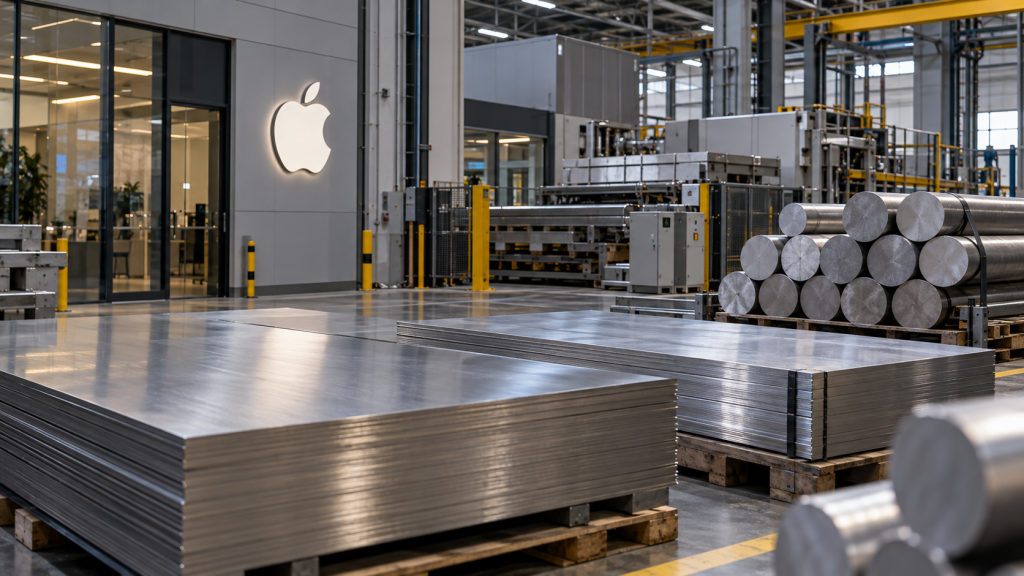
Under the arrangement, Perryman will process titanium at its Houston, Pennsylvania, facility, with the material containing at least 80% recycled content. Apple said the titanium would be used across several products, including its first foldable phone, referred to in the report as the iPhone Duo.
Domestic sourcing becomes a strategic priority
Technology companies depend on complex international supply chains for specialised materials, electronic components and final assembly. Expanding domestic sourcing can help companies diversify suppliers, support local manufacturing and respond to changing trade and industrial policies.
Apple’s titanium agreement is part of a broader commitment to US manufacturing. The company has also expanded its relationship with Qnity Electronics to support production of films for the variable-aperture camera system in the iPhone 18 Pro.
These arrangements demonstrate how manufacturing strategies extend beyond assembling finished devices. They also involve securing access to specialised materials and the industrial processes needed to produce advanced components.
Recycled materials and production capacity
The titanium agreement’s recycled-content requirement highlights another dimension of supply chain planning. Recycled materials can help reduce dependence on newly extracted resources, although their availability, processing requirements and cost competitiveness remain important considerations.
For suppliers, agreements with major technology companies can provide demand visibility and opportunities to invest in production capacity. However, the commercial benefits depend on contractual terms, manufacturing efficiency and the ability to meet demanding quality specifications.
Apple’s wider manufacturing programme also includes domestic chip production and glass manufacturing arrangements, according to the company. Such initiatives illustrate the range of industries involved in supplying modern consumer electronics.
Potential implications for suppliers and investors
The agreement could create opportunities for US materials producers and industrial suppliers that meet Apple’s technical and quality requirements.
However, a purchase commitment of up to $100 million should not automatically be interpreted as an equivalent amount of immediate revenue or profit. The actual financial impact depends on purchasing volumes, delivery schedules, pricing and production costs.
Investors evaluating Apple’s supply chain strategy will need to distinguish between announced commitments and their eventual contribution to financial results.
What comes next
Attention will turn to the implementation of the titanium agreement, the expansion of domestic production and the company’s broader manufacturing investments.
The development illustrates how major technology companies are using supplier relationships to pursue manufacturing resilience while continuing to develop new consumer products. The long-term impact will depend on execution, cost management and the commercial success of the products that use these materials.